
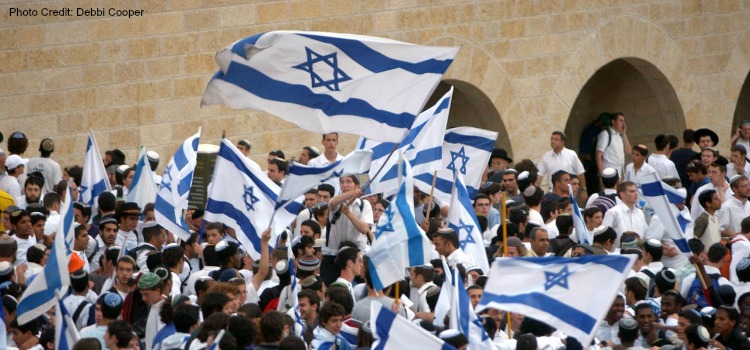
Yom Yerushalayim, Jerusalem Day, marks the miraculous events that led to the reunification of the Holy City during the Six-Day War in 1967. This was a major turning point in Israel’s history as the Temple Mount and Western Wall were reclaimed by the Jewish people after the city was divided during the 1948 Arab-Israeli war. In Israel, Jerusalem Day is a day of national and spiritual pride. It has been celebrated every year after 1967, and in 1998 was officially recognized as a national holiday by Israel’s parliament, the Knesset.
When is Yom Yerushalayim?
Every year, Jerusalem Day is celebrated on the 28th day of the Hebrew month of Iyar—six weeks after Passover and one week before Shavuot. In 2026, Yom Yerushalayim will be observed from the evening of May 14 until the evening of May 15. The holiday is one of four Jewish holidays that was added to the Jewish calendar in the 20th century (the others are Yom HaShoah (Holocaust Remembrance Day), Yom HaZikaron (Israel Memorial Day), and Yom HaAtzmaut (Israel Independence Day).
How Yom Yerushalayim is Celebrated
Photo credit: Debbie Cooper
Jerusalem Day is a time of national pride, thanksgiving, and remembrance. There are many Yom Yerushalayim events across the Holy Land like state ceremonies, prayers, and public celebrations that honor the city’s biblical and historical significance.
Across Israel, the celebrations begin with prayers of gratitude, including special readings of Psalms that praise Jerusalem. Religious Jews gather at synagogues, reciting Hallel—prayers of thanksgiving—while secular and religious Israelis alike participate in Yom Yerushalayim events:
- The flag parade – Thousands of people march through the streets of Jerusalem, waving Israeli flags, singing, and dancing. The parade makes its way through the Old City, culminating at the Western Wall.
- Memorial ceremonies – Commemorations take place in honor of the soldiers who gave their lives to liberate Jerusalem during the Six-Day War. Families of fallen soldiers share their stories, and prayers are said for the safety of Israel.
- Community events – Cities across Israel hold concerts, lectures, and cultural programs reflecting on the significance of Jerusalem in Jewish history.
- Visits to the Western Wall and Temple Mount – Many Israelis make a pilgrimage to Jerusalem, visiting sites of deep religious and historical meaning, offering prayers, and thanking God for the restoration of the Holy City.
For the international community, Jerusalem Day can still be celebrated through prayer, study, and acts of kindness that honor the spirit of the day.
The Six-Day War and The Day of Jerusalem
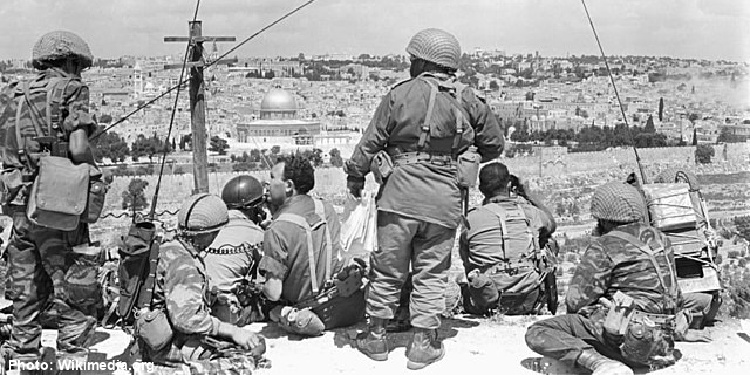
Photo credit: Amos Zucker | Wikimedia
On the morning of June 5, 1967, the entire Israeli air force struck at Egyptian airfields while Egyptian pilots were still eating breakfast. It was a brilliant move – within hours, hundreds of Egyptian planes were destroyed. Similar attacks were launched against Jordan and Syria, crippling their air forces. Israel then concentrated on fighting Arab forces on the ground, winning numerous victories. Six days later, Israel accepted an offer of ceasefire from her enemies.
The Six-Day War was a stunning victory for the Jewish state. Israeli forces gained control of Gaza and Sinai from Egypt, Judea and Samaria from Jordan, and the Golan Heights from Syria. The Holy City of Jerusalem, divided since the founding of the modern state of Israel in 1948, was at last united.
The Miracle of Yom Yerushalayim
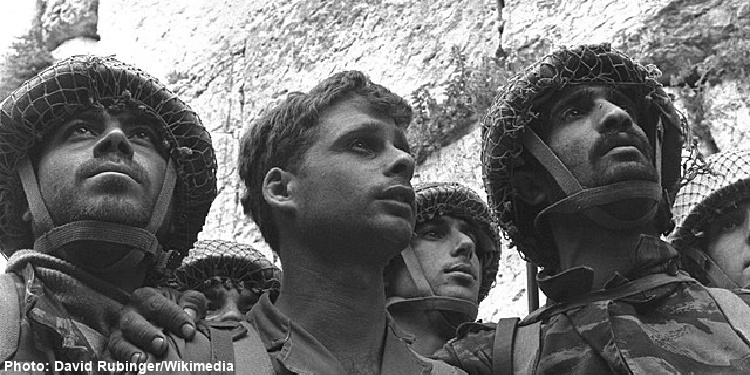
Israel was completely outnumbered and outgunned. The enemy had twice as many soldiers, three times as many planes, and four times as many tanks. But when Egypt realized that they were under attack, they did not shoot at the Israeli planes. Two planes carrying the top commanders of Egypt, Jordan, and Iraq were airborne at the time, and there were strict orders not to launch any antiaircraft missiles, which could have otherwise destroyed the attacking Israeli planes, because they could also mistakenly down the aircraft of these important commanders. So, Israel managed to eliminate more than half the Egyptian air force in less than an hour.
There are many more examples of inexplicable events that occurred to bring Israel to victory. By June 11, six days after the conflict had started, Israel had tripled her territory, and most importantly, reclaimed Jerusalem. And for the first time in two millennia, the Jews of Israel were able to go to the Western Wall under Jewish rule.
Take our quiz to discover how much you know about the Six-Day War and Jerusalem Day
Jerusalem in the Bible
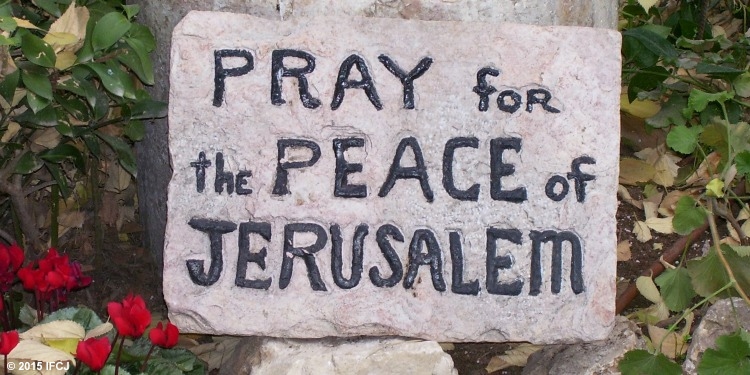
Photo credit: IFCJ
Jerusalem was designated as holy from the beginning of time. Key biblical events took place at what was to be the future site of this city: Adam was created in Jerusalem; Cain and Abel came to offer their first sacrifices to God in Jerusalem; Noah rebuilt the altar to God and offered his own sacrifices after surviving the Great Flood in Jerusalem.
But it wasn’t until 1000 B.C.E. that King David was finally able to conquer Jerusalem and declare it Israel’s capital, changing the course of history forever.
In the familiar words of Psalm 122:6, we are to “pray for the peace of Jerusalem.” Literally translated from the original Hebrew, the verse reads, “Ask about the peace of Jerusalem.” The rabbis explain that we must inquire about Jerusalem because when a person cares about something, they ask about its welfare.
Jewish tradition teaches that we must care about Jerusalem, pray for Jerusalem, and overall, desire Jerusalem. When we do, Jerusalem will not only be God’s Holy City, but our Holy City, too. If we seek it, we shall find it and bask in God’s glory.
The psalmist wrote, “If I forget you, Jerusalem, may my right hand forget its skill. May my tongue cling to the roof of my mouth if I do not remember you, if I do not consider Jerusalem my highest joy” (Psalm 137:5-6). This passage of Scripture expresses beautifully the longing of the Jewish people for their ancestral capital. Today, we thank God that longing has been realized.