
Simchat Torah celebrates the completion of the Torah reading cycle that Jews observe in synagogue each year, beginning with the first chapter of Genesis and ending with the closing words of Deuteronomy. Simchat Torah begins immediately after Shemini Atzeret. Learn more about Simchat Torah and how this unique holiday celebrates God’s greatest gift to us — His Word.
For 2026, Shemini Atzeret begins at sundown on October 2. At sundown the next day on October 3, Simchat Torah begins, ending the night of October 4. On the Jewish calendar, Shemini Atzeret always begins after Sukkot ends and is followed by Simchat Torah on the 22 and the 23 of the Hebrew month of Tishrei, respectively.
Shemini Atzeret and Simchat Torah
Immediately following the joyous festival of Sukkot, Jews around the world celebrate the holidays of Shemini Atzeret and then Simchat Torah. Shemini Atzeret, or the “Eighth Day of Assembly,” is technically a holiday in its own right, though it is also connected to the festival of Sukkot: “For seven days present food offerings to the LORD, and on the eighth day hold a sacred assembly” (Leviticus 23:36). In Israel, these two celebrations occur on the same day, but in the diaspora, Shemini Atzeret is celebrated the day after Sukkot.
Shemini Atzeret — A Day of Transition Before Simchat Torah
Shemini Atzeret and Simchat Torah contrast with the intense spiritual observance of the High Holy Days, which begin weeks before with Rosh Hashanah, the Jewish New Year, and end 10 days later with Yom Kippur, the Day of Atonement. Five days later, the seven-day festival of Sukkot is celebrated as Jews take to their booths. After seven days, it’s time for a return to regular life and daily routines.
Shemini Atzeret is a day of transition from the deep spiritual introspection of the High Holy Days to daily life. It’s the day on which God seemingly says, “Don’t leave it all behind – take the inspiration of these days back into your lives.”
Celebrating Simchat Torah
Now we can understand why Jews celebrate the Torah on Simchat Torah. God’s Word is the vehicle through which holiness is infused into daily life. When celebrating Simchat Torah, Jews are celebrating the centrality of the Torah to Jewish life as both a source of identity and a gift from God. It is a day that the entire community gathers to express joy together for having received God’s Word.
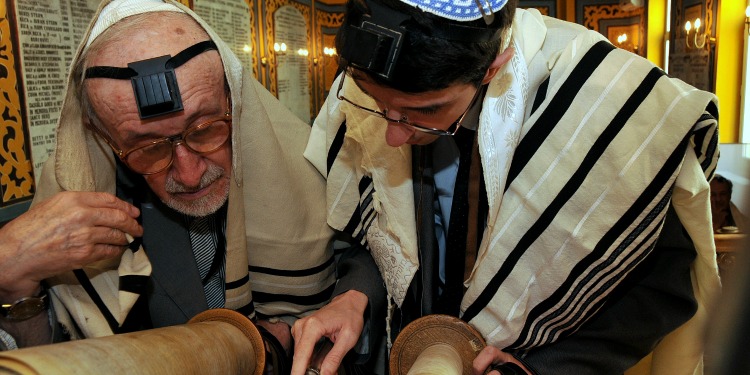
Simchat Torah also marks the completion of the annual cycle of reading from the Torah. Each week in synagogue, Jews read a portion of the Torah, called the parshah. Throughout the year, Jews read from Genesis to Deuteronomy. Then, the congregation celebrates as the ending of Deuteronomy is read. Except for Purim, Simchat Torah is the most joyous festival on the Jewish calendar.
What is Simchat Torah Observance Like?
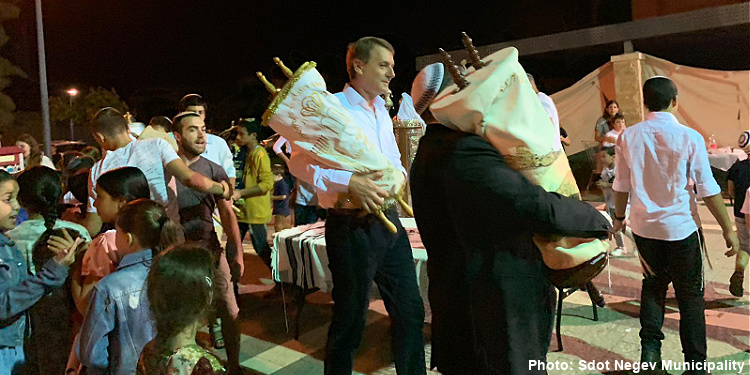
On Simchat Torah, the Torah scrolls are taken out of the ark in synagogues and carried around the sanctuary seven times amid singing and dancing. Children customarily lead the procession, waving flags inscribed with Bible verses or carrying miniature Torah scrolls. As the Torah passes, many people lean in to kiss the scrolls. The ceremony is known as hakafot, which in Hebrew means “to march around.”
Needless to say, traditional synagogue rules of decorum are waived on this holiday! Following the joyous festivities, the concluding portion of Deuteronomy is read and then the first portion of Genesis is again started. In this way God’s people demonstrate their love for the Torah, as well as the fact that His Word must be continuously learned.
How is Simchat Torah Celebrated?
Like Purim, Simchat Torah is a joyous festival with dancing, music, and, of course, food. Because entire congregations are celebrating together, buffet and family-style food is especially popular. Local favorites in Israel include hummus dips, meat and bread rolls, and plenty of other finger foods. Save for the year-round kosher observances, there are no dietary restrictions on Simchat Torah.
While there are no traditional greetings for Simchat Torah, general Jewish holiday greetings like chag sameach, happy holiday, are very welcome on this joyous day. Greetings for Simchat Torah also have a double meaning as a congratulations for completing the cycle of the Torah reading.
Learning: The Simchat Torah Meaning
In Judaism, the study of the Torah is a never-ending process. The meaning of Simchat Torah is that there always more to learn, and it’s wonderful. We never stop being students of the Torah.