
The Source of Life
Yael Eckstein | January 6, 2017
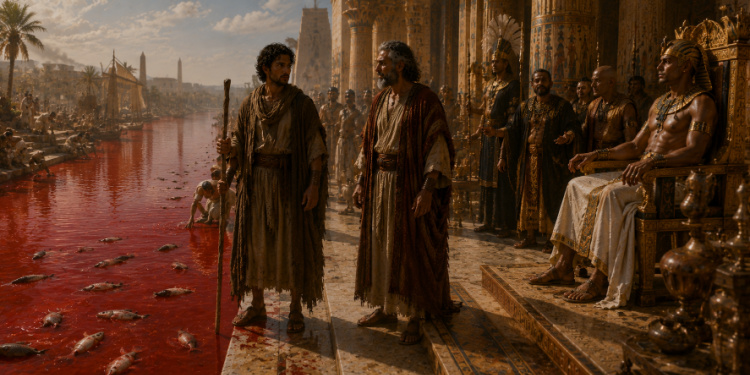
The Nile ran red.
And not just in one spot.
Red. Everywhere.
By the riverside, Egyptians stared into water the color of freshly spilt blood.
Fish floated, lifeless.
The smell spread. Rot. Death.
But Pharaoh stayed on his throne.
His magicians were summoned.
They spoke their incantations.
They made their gestures.
And before long, they too brought forth blood.
The magicians stood there, pleased with themselves.
Pharaoh smiled. He turned to Moses.
“So that’s your miracle?”
Egypt had wonders of its own.
Outside, the Nile remained red.
The fish remained dead.
The stench remained in the streets.
And Moses said nothing. He didn’t need to.
The river spoke for itself.
And as Pharaoh laughed, the power of God flowed past his palace walls.
Exodus 7:22
But the Egyptian magicians did the same things by their secret arts, and Pharaoh’s heart became hard; he would not listen to Moses and Aaron, just as the Lord had said.
The Nile isn’t just a river flowing through Egypt. In ancient times, it was the heart of the Egyptian nation—the source of life itself. Without it, Egypt’s fields would dry up and its cities would crumble.
To Pharaoh and his people, the Nile was a god.
So when God began to strike Egypt with plagues, He did not begin randomly. He began with the Nile. He turned its waters to blood.
But then something strange happened. Pharaoh’s magicians were able to imitate the miracle. And because of that, Pharaoh refused to listen. He hardened his heart.
Jewish tradition offers a fascinating insight into this Scripture. The sages imagine Pharaoh mocking Moses and Aaron with a sarcastic phrase: “Are you bringing straw to Ephraim?”
In Bible times, Ephraim was known for its abundance of straw. So Pharaoh was essentially saying, “You are bringing magic to Egypt—the place that already has more magic than anyone else.”
In Pharaoh’s eyes, Moses wasn’t a messenger of God. He was just another performer. Another magician trying to impress people with his illusions.
But Pharaoh missed the point God was making. The plagues weren’t magic tricks. And they weren’t a competition. God didn’t perform these miracles to entertain or amaze. They were an act of revelation. God was teaching Egypt—and teaching Israel—that He alone is the Creator and ruler over all life.
And that is why the Nile was struck first.
The Nile was worshiped as a source of life. But God showed Pharaoh that the river was not divine. It could not protect itself. It could not resist His will. It answered only to the One who made it.
And turning the water into blood carried another message. In the Bible, blood is not only a symbol of death—it is the essence of life. When Abel was murdered, God said, “Your brother’s blood cries out to Me from the ground.” Blood calls for justice. Blood demands that evil be seen.
So when the Nile turned to blood, it was as if God was declaring: “I see the suffering of My people. I hear their cries. And I will not ignore what has been done to them.”
Pharaoh thought his empire would last forever. But God was already showing him: no empire built on cruelty can endure.
And that’s still true for our world today. When evil seems powerful, when injustice feels unshakable, remember the lesson of the Nile: God is still the source of life. God is still the judge of the earth. And God is still able to redeem His people.
